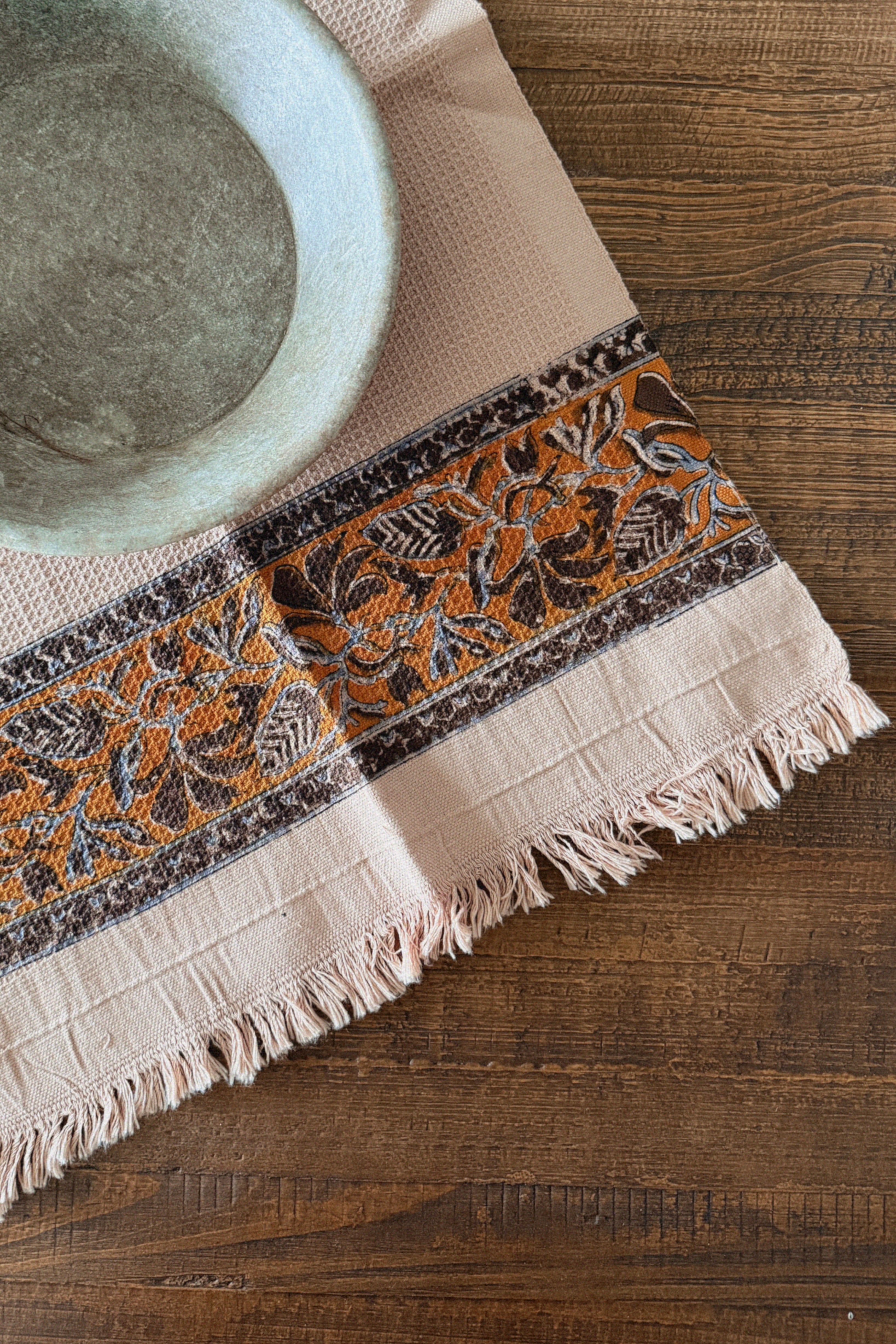
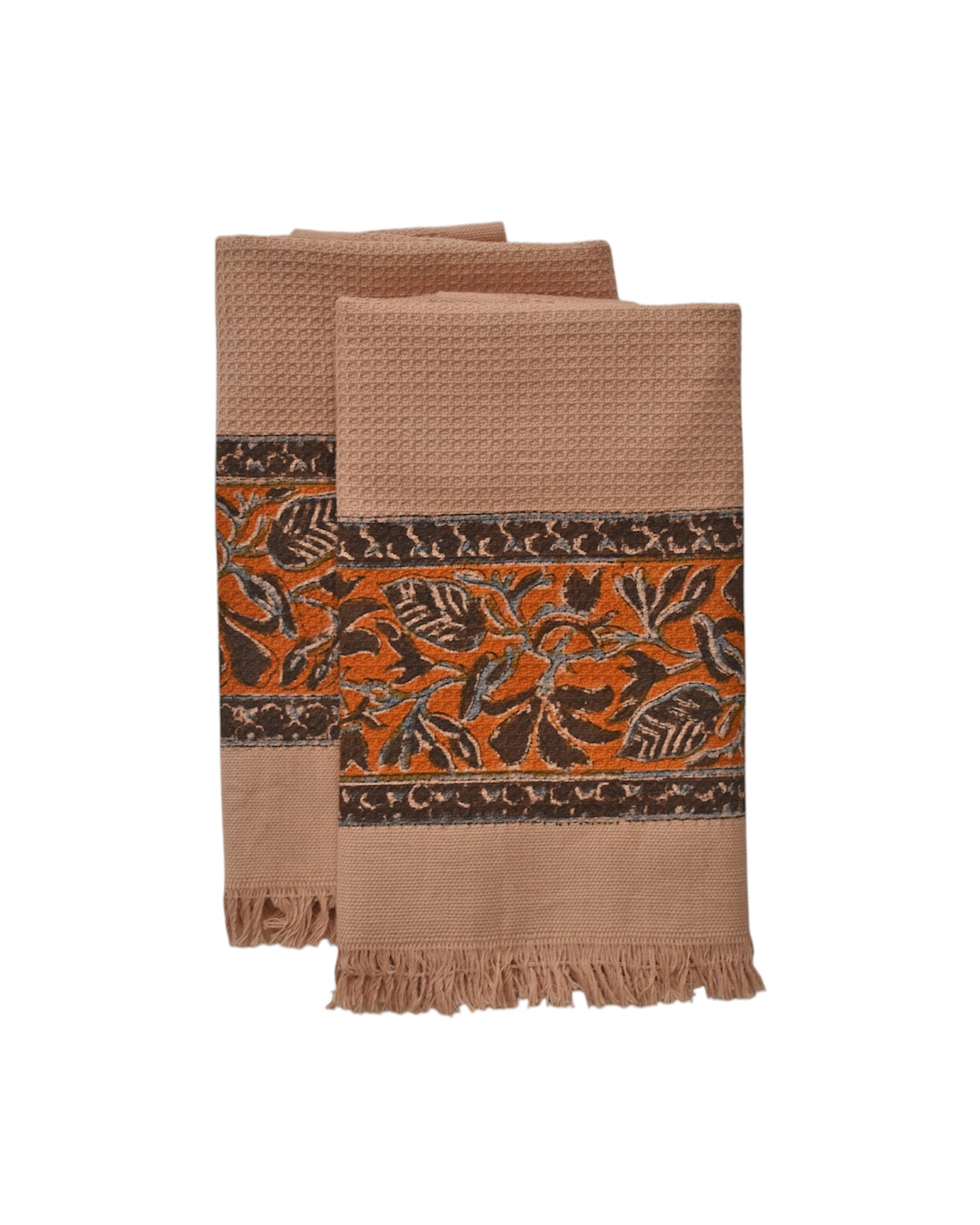

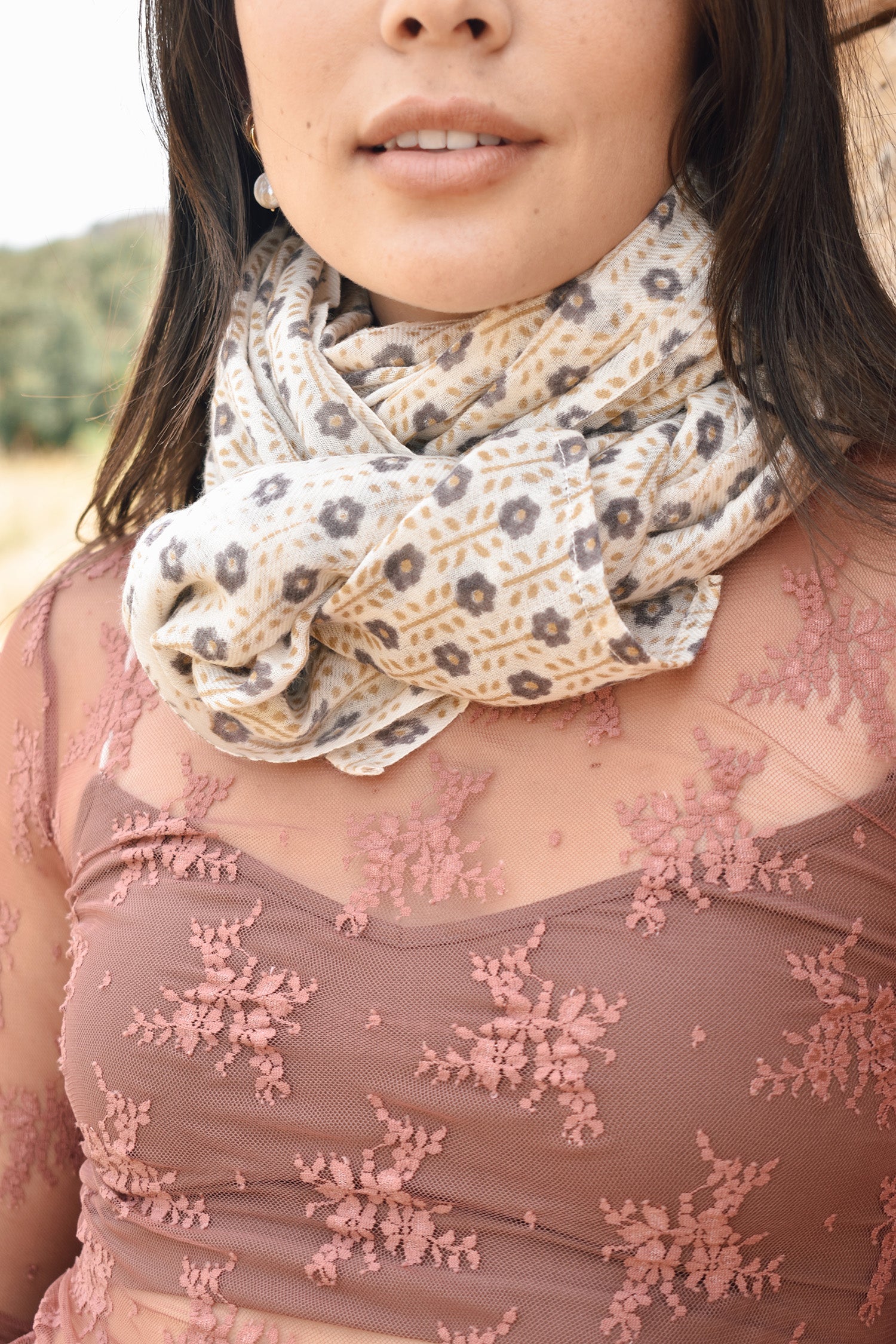


In an era of fast fashion and mass production, hand block printing is a revered, ancient art form that prioritizes art and skill over instant consumption. One single pattern doesn't instantly manifest from paper to block; it has to be drawn, traced, carved and ultimately printed by hand. Let's take a trip down this very laborious but magnificent process.
Designing The Pattern
Before it can ever hit the block, the design must first be drawn out. This can either be done by pencil on paper, or through apps like Procreate.
Sometimes a sketch will come to mind as I'm out and about, and I'll start with one element, like a single flower or set of lines. I then take a picture and upload into Procreate where I trace over my drawing. From there, I continue the digital textile design by expanding upon the first element and flushing out the full design to create a seamless pattern.
This is the hardest part for me. Creating a seamless pattern is a lot harder than it looks, because everything has to flow—there can't be any breaks that will disrupt the story the print is trying to convey. You don't want empty spaces that make the final piece look like a mistake.
Carving The Blocks
After the design is approved—meaning there are no gaps, the pattern is consistent, and the sizing is decided upon—the design is printed out.
The layout is then colored in with pencil so the artists know how many blocks to create. For example, if your design is a flower, and the stem of the flower is green and the petals are pink, you need two blocks carved; one for the stem and one for the petals.
But let's say there are some clouds in this design too, and they're also pink. Those clouds can be carved into the exact same block as the petals because they share a color, meaning they can be printed at the same time.
Knowing this truly conveys the complexity and laborious task of block printing. For a print that features five different colors, that's five different blocks that need to be carved and printed, in separate rounds.
Once the design is colored in, the artists will place this over a piece of wood and start nailing in identifying marks before using a chisel to chip away the wood, slowly bringing the design to life.
Mixology 101
Once the blocks are chiseled and ready for printing, the dye is prepped. Our workshop actually creates the dye by hand, carefully adjusting the formula by adding a little bit more of a particular color to achieve the desired hue.

This is a lengthy process because the dye sitting in the mixing container rarely reflects how it will look once it's actually stamped onto fabric. Furthermore, what shows up inside the workshop may look completely different under natural sunlight.
Before the printing process truly begins, we also print a sample piece so we can see how it looks dried in natural sunlight. And if the hue needs adjusting, we have to go through the same process all over again: adjust the formula, print a sample, wait for it to dry, review in the sunlight, make adjustments until it’s approved.
The Moment We’ve Been Waiting For
The blocks are carved. The dye is mixed. The fabric is laid out. Now, it’s time to print.
Depending on the design and intricacy of the print, printing can take anywhere from a day to a week, often with multiple designers working on the same design simultaneously on different tables throughout the workshop.
Depending on the design and intricacy of the print, the stamping process can take anywhere from a day to a week, often with multiple designers working on the same exact design simultaneously throughout the workshop. Because each color features its own unique spot in the design, one round of printing with the first block must dry completely before the next round with the next color block can even begin.
Aside from wanting each print to feel one-of-a-kind, this intricate, time-consuming printing process is another reason we choose to print in small batches. If we printed a thousand pieces of one bandana design, it’d take weeks and weeks—and too much time would go by in between collections with nothing new to share with you.
Because our wooden blocks are hand-carved and printed in small batches, our collections are inherently limited and sell out quickly.
Want early access? Join our newsletter list to get exclusive, early-bird access to our next collection drop.
Leave a comment